Online safety • Human trafficking prevention • Youth empowerment
Protecting Children Online
A simple message for students and parents: if something feels wrong, you do not have to handle it alone.
Trust yourself.If something feels wrong, it probably is.
Get help.A safe person can help you think through what to do next.
You matter.You deserve to feel safe and supported.
For students
Read this first. Then reach out.
You do not need to prove something is dangerous before asking for help. Your instincts are enough reason to talk to someone safe.
🧠Trust your instincts
If a message, request, or person makes you uncomfortable, pause. That feeling matters.
🤝Talk to a safe person
Choose someone you trust: a parent, caregiver, teacher, counselor, coach, or family friend.
🔒Do not keep scary secrets
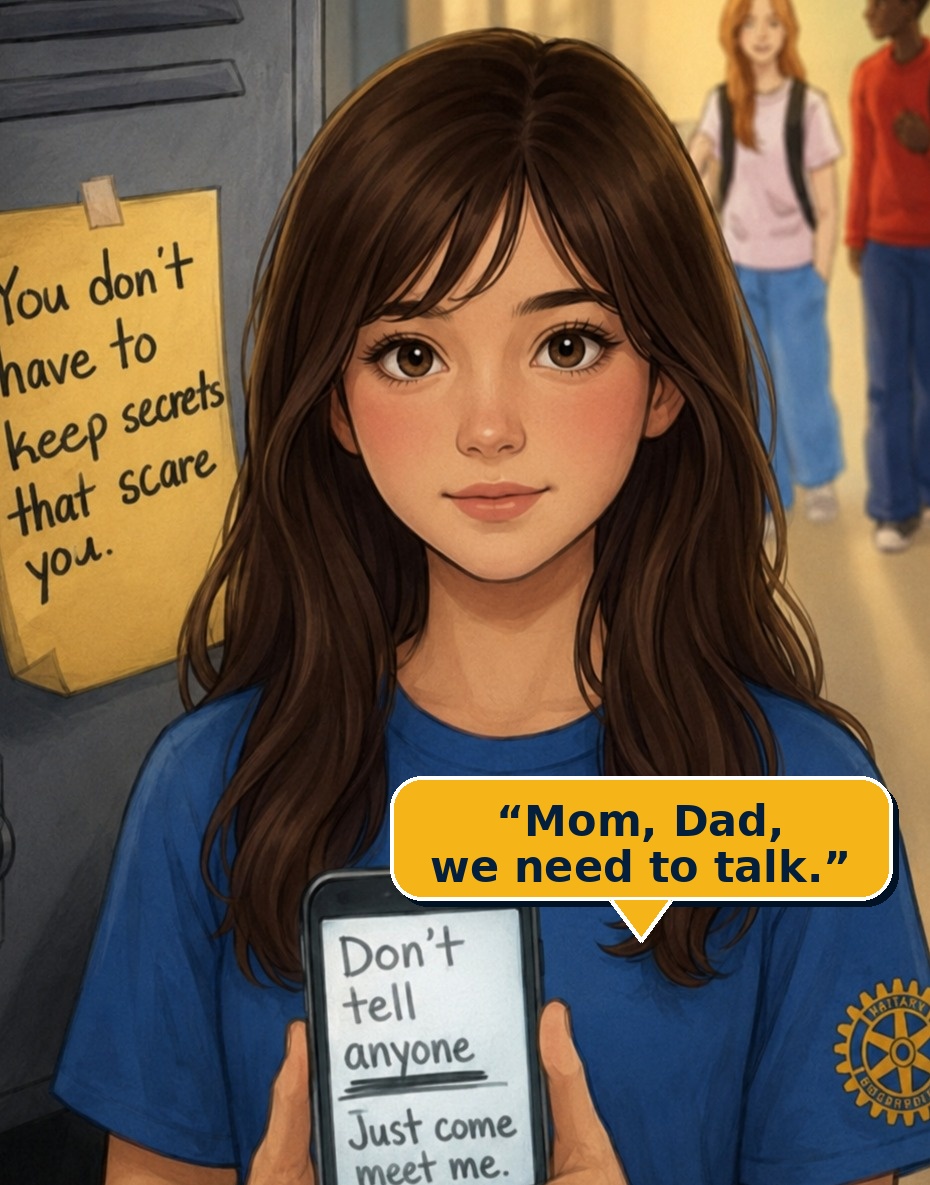
If someone says “don’t tell anyone,” that is exactly when you should tell a safe adult.
🔎Think before you click
Not everyone online is who they say they are. Never send private details, photos, or meetups.
Need a sentence to start?
Try this: “Something happened online and I’m not sure what to do. Can you help me?”
For parents and caregivers
Look for patterns, not panic.
Predatory internet grooming often starts with trust-building, then gradually moves toward secrecy, private channels, personal details, photos, threats, or manipulation.
Where it happens
- 📱 Social media apps
- 🎮 Online gaming platforms
- 💬 Messaging and chat apps
- 🎥 Video streaming and live chat
- 🌐 Online forums and communities
Warning signs
- 🤫 Requests for total secrecy from parents
- 🎁 Sudden attention, gifts, or compliments
- 📍 Asking for school, address, routines, or location
- 🔐 Moving conversations to private apps
- 📸 Demanding photos or videos
- ⚠️ Threats, pressure, manipulation, or blackmail
Talk openly
Make conversations regular, calm, and nonjudgmental so your child can come to you early.
Know their world
Ask what apps, games, chats, and communities they use. Learn with them, not over them.
Pay attention
Notice sudden secrecy, mood shifts, anxiety around devices, gifts, or a new “friend” online.
Set boundaries
Create clear safety rules and review privacy settings together.
From the World Cup ACT Toolkit
20 Ways to Turn Awareness Into Action
A calm, practical guide to what matters most: learn responsibly, protect young people, support survivors, and take one meaningful step in your community.
Learn Safely
- Awareness alone is not enough.How we raise awareness matters. Keep it ethical, respectful, and survivor-informed.
- Start with one action.You do not have to do everything. Choose one useful step and begin there.
- Define your community broadly.Your community may be your town, school, workplace, club, faith group, or online network.
- Learn before sharing.Use credible resources that explain coercion, control, and vulnerability without stereotypes.
- Talk about all forms of trafficking.Include sex trafficking, labor trafficking, and familial trafficking.
Protect Students
- Trafficking can happen to anyone.It can affect people of any age, gender, race, background, or income level.
- Victims may not recognize exploitation.Fear, manipulation, threats, or coercive control can make it hard to name what is happening.
- Keep the focus on control.Explain abuse, fear, manipulation, and exploitation rather than relying on shock tactics.
- Schools can use the CLEAR Program.CLEAR focuses on comprehension, lived experience, education, action, and response.
- Give students language to ask for help.Simple phrases like “I’m not sure what to do” can open the door to support.
Support Survivors
- Partner with survivor-led organizations.Whenever possible, work with survivor-led or survivor-inclusive groups.
- Use language that does no harm.Avoid victim-blaming, shame, sensational images, or exploitative storytelling.
- Survivors should shape the work.Survivor expertise should guide prevention efforts from the beginning, not just approve them later.
- Compensate survivor expertise.Do not ask survivors to educate, advise, or speak without valuing their labor.
- Do not force trauma stories.Survivors should choose what they share, how they are described, and whether they speak at all.
Take Community Action
- New Jersey has a special role in 2026.MetLife Stadium will host World Cup matches, including the final, so preparation matters.
- Large events can increase vulnerability.Communities should prepare for both sex and labor trafficking risks before, during, and after events.
- Municipalities can issue proclamations.A local proclamation can publicly commit the community to prevention and survivor-informed response.
- Request responsible speakers.Choose trained, trauma-informed speakers who focus on prevention and response, not graphic stories.
- Support survivors beyond awareness.Fund trauma-informed services, advocate for survivor-centered policies, and stay engaged after the event.
The simplest next step: pick one action, invite one partner, and share one resource that helps people respond safely.
Open the full toolkit
Our promise: clear, calm, survivor-informed awareness.
This site avoids fear-based shock tactics. It focuses on what people can recognize, what they can say, and where they can turn for help.